How to Apply to International Performing Arts Festivals
A practical guide for independent performing artists and companies. Learn how to find international festivals, prepare strong applications, approach programmers, and follow up on opportunities.
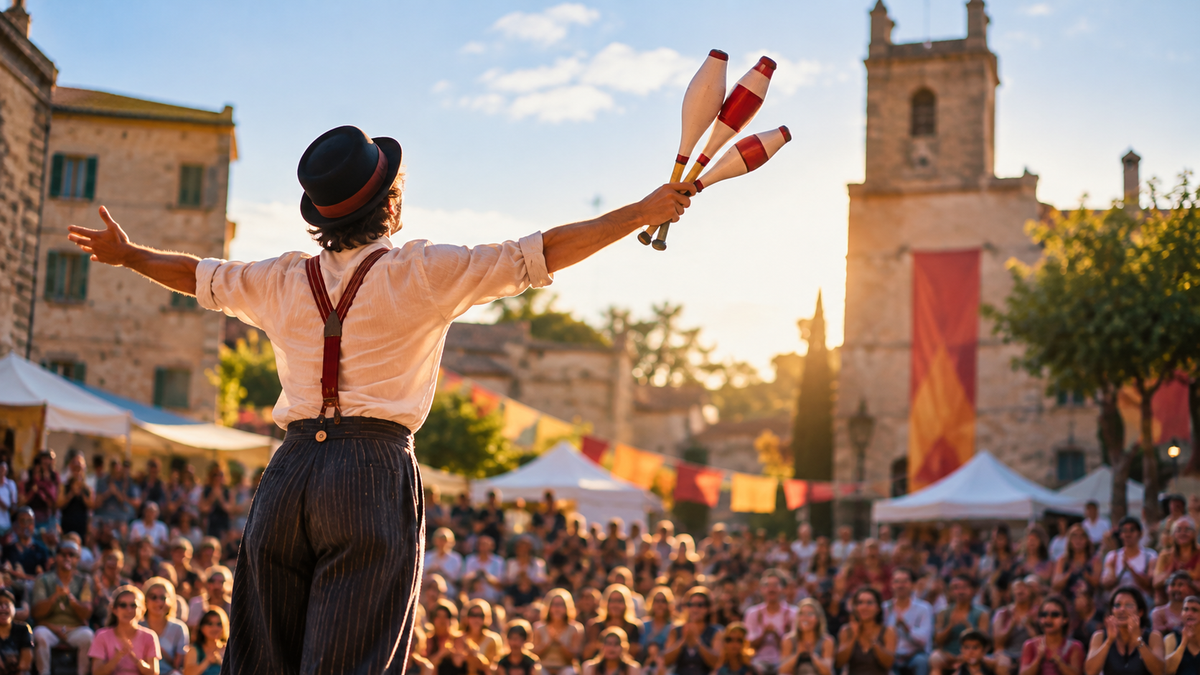
Applying to an international performing arts festival can open doors to new audiences, professional connections, and future touring opportunities. But finding the right festivals and submitting a strong application takes more than sending a video and hoping for a reply.
For independent artists and performing arts companies, the process involves researching festivals, understanding their programming, preparing professional materials, evaluating financial conditions, and following up with organizers.
Whether you work in circus, theatre, dance, clown, puppetry, or street performance, this guide will help you approach international festivals more strategically — from finding your first opportunity to confirming a booking.
1. How International Performing Arts Festivals Select Artists
Not every festival books artists in the same way. Understanding how a festival builds its programme is essential before submitting your work.
Open calls
An open call is a public invitation for artists or companies to submit proposals. Festivals usually publish eligibility requirements, application deadlines, artistic criteria, and instructions for sending materials.
Some use online forms, while others accept applications by email.
An open call does not necessarily mean the festival pays an artistic fee. Financial conditions vary considerably, so always read the participation terms before applying.
Curated programmes
Many festivals build their programmes through artistic directors, programmers, and curatorial teams.
These professionals discover shows by attending performances, visiting showcases, receiving recommendations, and maintaining relationships with artists and agencies.
A festival may have no open application process for its main programme while accepting submissions for a separate section.
For example, the Festival d’Avignon in France selects artists for its official programme through its artistic directors, while the independent Festival Off has a separate participation process. This distinction highlights why artists should identify the right programme and understand its application requirements before submitting their work.
The lesson: always identify which section of a festival is actually open to applications.
Open-access and Fringe festivals
Some Fringe festivals use an open-access model rather than traditional artistic selection.
At the Edinburgh Festival Fringe, for example, artists generally arrange a venue and register their shows rather than applying to a central artistic selection committee.
This creates opportunities for independent performers, but artists must consider registration, venue, accommodation, travel, marketing, and other production expenses.
Participating in an open-access festival is not equivalent to receiving a paid booking.
Independent participation and street arts
Some festivals offer additional participation formats for artists working in public spaces.
The Festival International de Théâtre de Rue d’Aurillac in France, for instance, has a Compagnies de passageprogramme for artists and companies participating on their own initiative.
This is different from being invited into the festival's official curated programme.
For street performers, understanding the distinction between an invited performance, a registered participation, and a self-produced appearance is particularly important.
2. Where to Find International Festival Opportunities
Finding opportunities is a continuous process. A festival that matches your artistic discipline may not have an open call today, but could become relevant for a future edition.
The most effective approach is to build a focused list of potential festivals instead of searching from scratch every time you want to apply.
Start with festivals that match your show
Look for festivals that regularly programme work similar to yours.
Consider:
- Artistic discipline: circus, physical theatre, dance, puppetry, multidisciplinary performance, or street arts.
- Audience: families, children, adults, or specialist audiences.
- Performance format: indoor stage, outdoor public space, site-specific performance, or walkabout.
- Duration: a short act, a complete show, or multiple performances.
- Scale: small community festivals, international showcases, or large multidisciplinary events.
Review previous editions whenever possible. Festival archives, programmes, and videos can tell you more about artistic compatibility than a general festival description.
Use specialized resources
Useful starting points include:
- EyTour! Opportunities — a public catalogue for discovering performing arts opportunities.
- On the Move — international cultural mobility opportunities, open calls, and funding information.
- Official festival websites — the primary source for current application requirements.
- Professional networks, artistic associations, and industry showcases.
Social media can help you discover announcements, but it should not replace checking the official terms of a call.
Research beyond open calls
A festival without an active application form is not necessarily irrelevant.
If its programming matches your work, you can research its next edition, identify its artistic team, and determine whether professional proposals are welcome.
Keep separate records for festivals that are accepting applications now and festivals you want to approach later.
Over time, this becomes a valuable professional contact list rather than a collection of forgotten bookmarks.
3. How to Evaluate Whether a Festival Is Right for Your Show
Before preparing an application, ask a more important question: Is this opportunity actually suitable for my performance?
Applying indiscriminately can consume hours that would be better spent pursuing festivals with a stronger match.
Check artistic and technical compatibility
A festival may programme circus but specialize in contemporary productions for large stages. Another may favour intimate outdoor performances or family-friendly street shows.
Consider whether your production fits its artistic identity and practical conditions.
For example:
- Can your performance work without theatrical lighting?
- Do you need a silent indoor environment?
- How much stage space is required?
- Is your show suitable for non-native speakers?
- Can you perform several times per day?
- How much time do you need for setup and dismantling?
- Are there restrictions involving sound, fire, rigging, or public participation?
A visually driven performance with minimal dialogue may be easier to tour across language barriers, but every venue still has technical and logistical requirements.
Understand the financial conditions
Not every international festival opportunity is financially sustainable.
Before accepting an invitation, clarify:
- Is there a guaranteed artistic fee?
- Are travel expenses covered?
- Who pays for accommodation and meals?
- Is local transportation provided?
- Does the festival supply sound, lighting, or technical staff?
- Are visas, permits, insurance, or taxes your responsibility?
- Are there registration fees or deductions from ticket revenue?
- When and how will payment be made?
A festival offering accommodation but no performance fee may be useful for a specific artistic objective, yet unsuitable for a commercial tour.
Calculate the total cost of participation rather than judging the opportunity only by its international visibility.
Think about geography and touring routes
A single booking on another continent can involve considerable travel costs.
Several performances within the same region may be more efficient.
When evaluating a festival, investigate other potential venues and events nearby, especially before and after its dates.
A coordinated route can reduce transportation costs and make an international tour more viable.
4. What to Include in a Professional Festival Application
Your application should make it easy for a programmer to understand your performance and evaluate whether it fits the festival.
A clear, concise proposal is usually more useful than a large collection of promotional material.
Prepare a professional press kit
Depending on the festival's requirements, your materials should include:
Show description
Explain the artistic concept, format, duration, and intended audience. Describe what spectators will experience rather than relying only on abstract artistic statements.
Artist or company biography
Introduce the people behind the project, relevant artistic experience, and previous performances.
Prioritize information that establishes credibility and helps programmers understand your work.
Performance video
Provide a reliable link to a full-length recording when requested.
A short trailer can help introduce the show, but it does not always replace a complete recording. Programmers may need to evaluate pacing, audience interaction, and how the performance develops over time.
Professional photographs
Prepare high-quality images that accurately represent the show.
Include horizontal and vertical options when possible, and provide photographer credits.
Technical rider
Clearly describe your technical requirements, including stage dimensions, sound, lighting, power, setup time, and any special equipment.
Contact information
Make it immediately clear who handles bookings, whether that is the artist, company manager, producer, or representative.
Adapt your application to the festival
A strong application is not simply a generic email sent to hundreds of organizations.
Explain why your work belongs in that particular programme.
Mention a relevant festival section, artistic focus, audience, or presentation format.
For instance, a family-friendly outdoor circus show should be presented differently to a street arts festival than to a contemporary theatre venue.
You do not need to rewrite your entire press kit for each application. A short, relevant introduction can make the proposal much more useful to the recipient.
Follow the instructions precisely
If the festival requests an online form, use it.
If it requires a full video, do not send only a trailer.
If the rules specify a maximum performance duration or restrict participation by country, verify your eligibility before applying.
Check all links and attachments before submitting, and keep a record of exactly what you sent.
The full Finder opens with early access.
Join the EyTour! waitlist to request early access and explore the full opportunities catalogue when your access is enabled.
5. Open Calls vs. Direct Contact with Festival Programmers
There are two common ways to approach a festival: submit through an official application process or contact a relevant programmer directly.
Each requires a different strategy.
When there is an open call
Follow the published process.
Even if you already know someone on the festival team, an application form may be mandatory.
Submit before the deadline, allow time for technical problems, and save the confirmation.
If the festival provides a decision timeline, use that information to plan your follow-up.
When there is no open call
First check whether the festival accepts unsolicited proposals.
If it does, identify the relevant artistic or programming contact. Avoid sending the same message to several unrelated addresses.
A professional introduction should be short, specific, and easy to evaluate.
For example:
Subject: Performance proposal — [Show Title] — [Festival Name]
Dear [Programmer's Name],
I'm reaching out to introduce [Show Title], a [duration]-minute [discipline] performance by [Artist/Company], based in [Country].
I believe the show could be a good fit for [Festival Name], particularly its focus on [relevant artistic feature or audience].
You can watch a full performance here: [Video Link]
The press kit and technical information are available here: [Press Kit Link].
I'd be happy to share additional details if the show could be relevant to a future edition.
Best regards,
[Name]
[Artist/Company]
[Website]
This is a starting point, not a message to send unchanged to every festival.
Avoid these common mistakes
- Sending very long introductory emails.
- Attaching large video files instead of sharing accessible links.
- Contacting festivals without researching their programme.
- Ignoring application rules.
- Sending repeated follow-ups within a short period.
- Describing an artistic project without providing a clear performance video.
- Assuming that international exposure automatically compensates for unpaid work.
Your goal is to make the programmer's decision easier, not to overwhelm them with information.
6. How to Follow Up and Track Festival Applications
Submitting an application is only one step in a much longer process.
Artists often contact dozens of festivals across multiple countries and seasons. Without a reliable system, it becomes difficult to remember who received which proposal, when to follow up, or what conditions were discussed.
Record every application
For each opportunity, keep at least:
- Festival name and country.
- Website and application link.
- Relevant edition or festival dates.
- Application deadline.
- Artistic or administrative contact.
- Date of submission.
- Show proposed.
- Current application status.
- Expected response date, if available.
- Next follow-up action.
- Financial or technical conditions discussed.
You should also preserve relevant correspondence so that important information does not get lost across email threads.
Use clear application statuses
A practical workflow might look like this:
Researching → Ready to apply → Applied → In conversation → Offer received → Confirmed
You can also record declined, cancelled, and unanswered opportunities separately.
The important thing is to distinguish between a proposal you have sent, a promising conversation, and an actual booking.
A positive response such as “We are interested” is not the same as a confirmed performance agreement.
Follow up without creating pressure
If the festival has published a notification date, respect it.
For direct proposals without a stated timeline, a polite follow-up after a reasonable interval can be appropriate.
Keep it brief, refer to the original message, and provide a reason for following up if possible.
For example, you might mention upcoming performances in the festival's region or a period of touring availability.
If there is no response after one or two appropriate follow-ups, it is generally better to move on and revisit the opportunity when there is a meaningful update.
Keep your information organized
Spreadsheets and email folders can work for a small number of applications. As the number of opportunities, contacts, and negotiations grows, managing everything manually becomes more difficult.
EyTour! is designed for performing arts professionals who need to organize opportunities, manage communications, follow up on negotiations, and coordinate touring activity in one place.
Whatever tools you choose, the principle is the same: every application should have a clear status and an identifiable next action.
7. From Festival Acceptance to Confirmed Booking
Getting a positive response from a festival is an important milestone, but your work is not finished.
Before treating the opportunity as confirmed, establish the practical and commercial conditions.
Confirm the agreement
Depending on the festival and country, this may involve a formal contract, an engagement agreement, or another documented confirmation.
Clarify:
- Exact performance dates and number of shows.
- Artistic fee and payment currency.
- Payment schedule and invoicing requirements.
- Responsibilities for international and local transportation.
- Accommodation arrangements.
- Technical equipment and staffing.
- Cancellation conditions.
- Publicity and recording permissions.
Keep the agreed terms accessible to everyone responsible for the performance.
Prepare for international travel
Travel requirements depend on your nationality, country of residence, destination, and the nature of your engagement.
Check whether you need a visa, work authorization, insurance, or documentation for transporting professional equipment.
Do not assume that entering a country as a tourist automatically allows paid performances.
Consult official government or consular sources for the destination country before making non-refundable travel commitments.
If you are coordinating several festivals, verify that travel times, rest periods, technical requirements, and performance schedules are realistic.
Maintain the professional relationship
After the festival, follow up with the organizing team.
Thank them for the collaboration, address any pending administrative matters, and keep a record of the professional contacts you made.
A successful performance can lead to recommendations, repeat invitations, or introductions to other programmers.
Festival participation should be seen not only as an isolated event, but also as part of a longer-term professional network.
Festival Application Checklist
Before submitting your next international festival application, use this checklist:
Confirm that the festival programmes your artistic discipline.
Identify the correct application process or programming contact.
Read the eligibility criteria and participation conditions.
Verify the deadline and performance dates.
Check the financial and technical requirements.
Prepare a clear show description and professional biography.
Provide a working full-performance video when required.
Include photographs, press kit, and technical rider.
Adapt your introduction to the festival.
Submit all requested materials in the correct format.
Save the application confirmation and correspondence.
Record the next action or expected response date.
Final Thoughts: Build a Sustainable Festival Application Strategy
Applying to international performing arts festivals is not simply a question of sending more applications.
It is about identifying the right opportunities, presenting your work clearly, understanding the conditions, and maintaining professional relationships over time.
A focused application to a festival that genuinely matches your show can be more valuable than dozens of generic submissions.
Start by building a list of relevant festivals, preparing reliable promotional materials, and establishing a consistent follow-up routine.
As opportunities develop into negotiations and confirmed performances, connect them to your wider touring plans.
The goal is not just to apply to festivals. It is to build a sustainable international performing arts career.
Explore performing arts opportunities on EyTour! and start organizing your next applications.